
The Golden Triangle or The Mewar Story: Choosing Your First Rajasthan Trip
Both are honest first trips. They're just answering different questions.
26 August 2026 · 7 min read · IndiCulture
The short version
The Golden Triangle (6 days / 5 nights, starting and ending in Delhi) is the classic first trip to northern India — Delhi, Jaipur and Agra, ending with the Taj Mahal. The Mewar Story (4 days / 3 nights, starting and ending in Jaipur) is a shorter, more focused trip into the history of a single kingdom — Chittorgarh, Udaipur and Kumbhalgarh — told as one continuous story rather than a list of stops.
If you're choosing between them, the real question isn't which is 'better' — it's whether you want the essential introduction to India, or a deeper, narrower trip into one region's history.
The Golden Triangle, day by day
- Days 1–2
- Delhi — Old Delhi's lanes around Chandni Chowk, then New Delhi's monuments and neighbourhoods at a walking pace.
- Day 3
- Drive to Jaipur, arriving in time for an evening market or food experience.
- Day 4
- Amber Fort before the crowds, the old city, and the workshops and households still working behind Jaipur's facades.
- Day 5
- Drive to Agra by way of Fatehpur Sikri, the Mughal capital built, used briefly, and abandoned.
- Day 6
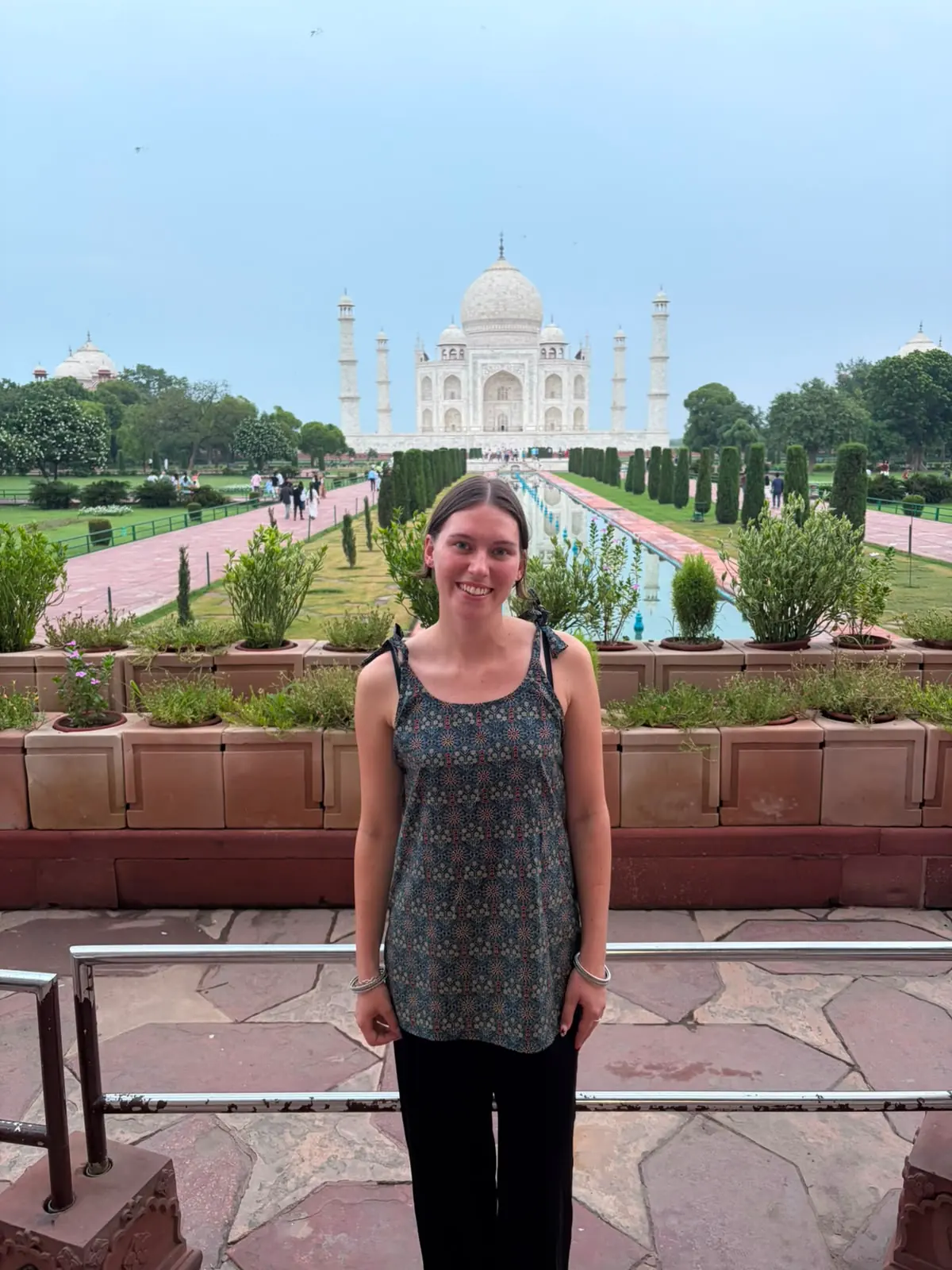
- The Taj Mahal and Agra Fort in the morning light, then the return to Delhi.
It's built for someone whose first stop in India is Delhi, and who wants the single most-asked-for itinerary in the country — three cities, three completely different characters, and the one monument almost everyone pictures when they picture India.
The Mewar Story, day by day
- Day 1
- South from Jaipur, stopping at Chittorgarh Fort — the sieges, the Tower of Victory, and the ground the Mewar story begins on — then on to Udaipur by evening.
- Day 2
- Udaipur's City Palace and old city, its lakes, the Monsoon Palace on the ridge above town, and the Maharana Pratap Memorial.
- Day 3
- Two hours out to Kumbhalgarh for the fort and its rampart — the second-longest wall in the world — back to Udaipur for a cultural evening at seven.
- Day 4
- The road back to Jaipur.
It's shorter and it stays in one region, which is exactly the point — the four rulers whose story it tells (Rana Kumbha, Rana Sanga, Maharana Udai Singh II and Maharana Pratap) connect Chittorgarh, Kumbhalgarh and Udaipur into one narrative rather than four separate stops, and four days is enough to follow it properly without rushing.
Which one fits your trip
- Starting in Delhi, or want the essential three-city introduction to India: The Golden Triangle.
- Already in or ending in Jaipur, and want a focused history trip rather than a country introduction: The Mewar Story.
- Have five nights to spend rather than three: The Golden Triangle uses the extra time properly, at a city-paced (not coach-paced) rhythm.
- Want lake country, forts and one continuous story rather than three different cities: The Mewar Story.
- Can't decide: both routes can be extended, and The Mewar Story's own 'made yours' options include ending in Udaipur instead of returning to Jaipur — which pairs naturally with a Golden Triangle that starts in Delhi and finishes east, if you have the time to link the two.
From a traveller
I recently had the privilege of doing two trips and some cooking classes with IndiCulture and could not recommend them more highly. The trips were personalised to what I wanted to experience and see, but also gave me the opportunity to explore places I would never have seen on my own. Having locals guide me meant I got to spend my time enjoying the experience and learning about the culture without stressing about the itinerary, where I had to be or how I was going to get there. I especially valued Abhyudaya's and Mimansa's knowledge in explaining local customs, history and navigating all the sights with ease.
The cooking classes were also such a memorable way to experience the culture beyond sightseeing. Again, they were personalised and gave me the opportunity to learn traditional Rajasthani recipes from a local. I was able to practise Indian cooking techniques hands-on, ask questions as we cooked, and understand not only how the dishes were made, but why particular ingredients and techniques were used. This made the experience feel so much more meaningful and authentic.
I would highly recommend IndiCulture to anyone wanting to experience India in a more authentic and personal way.
Where this leads
- The Golden Triangle
6 days, Delhi to Agra by way of Jaipur.
- The Mewar Story
4 days, Jaipur to Udaipur and back.
- All four Rajasthan Journeys
Including the wildlife and seasonal routes too.